Malaysia says cybersecurity now central to national sovereignty amid evolving digital threats
07/07/2026 · MUHAMMAD ZAIDI (zaidi.azmi@myid.my)
PUTRAJAYA, 7 July 2026 - Malaysia can no longer view cybersecurity as merely a technical issue, but must instead treat it as a core pillar of national security as the country becomes increasingly reliant on digital infrastructure, said the National Security Council (NSC).
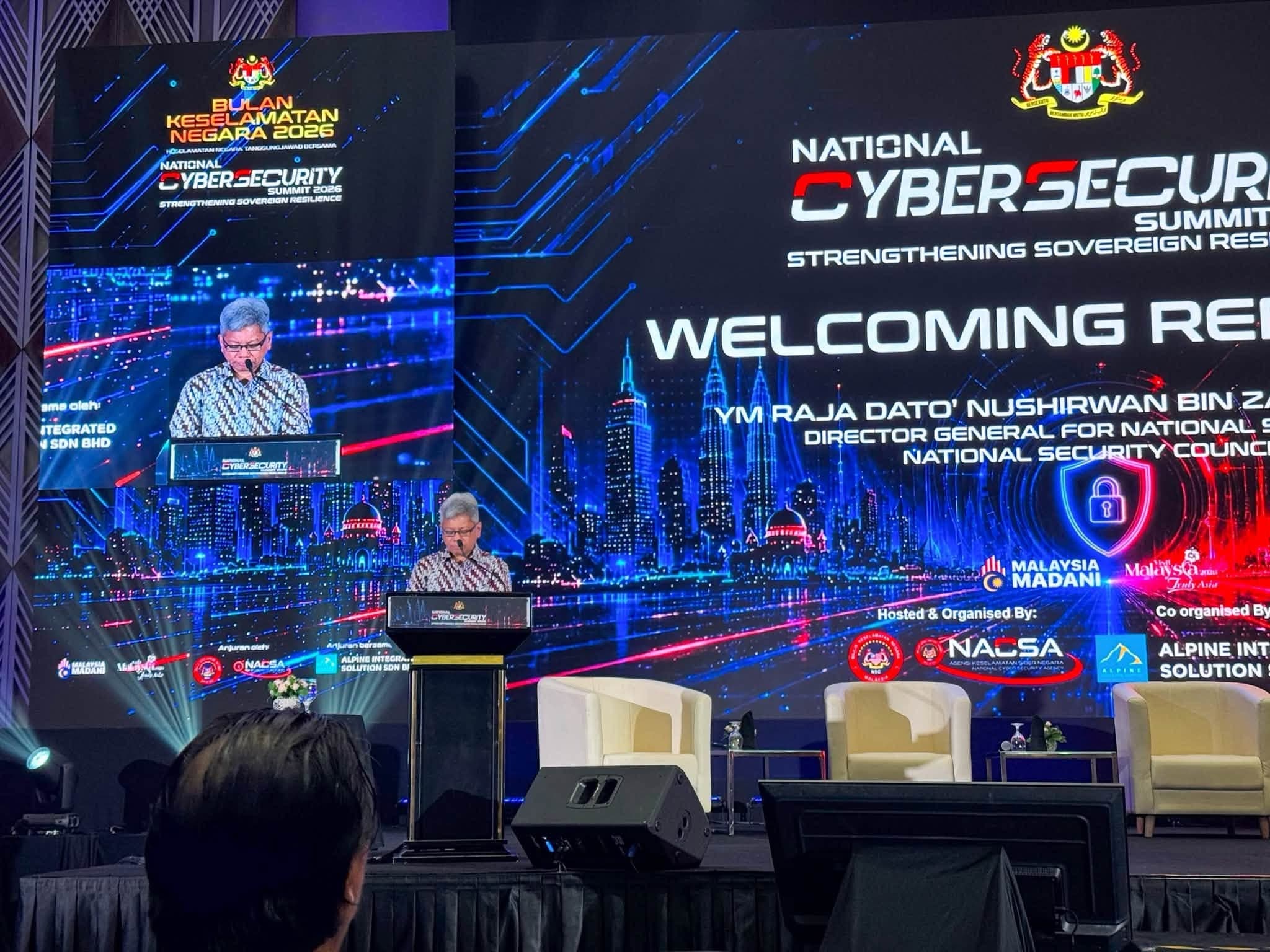
Opening the National Cyber Security Summit (NCSS) 2026, NSC Director-General YM Raja Dato' Nushirwan Zainal Abidin said the nature of national security had evolved beyond protecting physical borders to safeguarding the country's digital domain.
“Our sovereignty, economic prosperity, critical infrastructure and public trust are increasingly dependent on the security, resilience and trustworthiness of our digital domain,” he said.
He warned that cyber threats had grown more sophisticated, citing advanced persistent threats (APTs), organised cybercriminal groups, ransomware attacks and the rapid advancement of artificial intelligence (AI) as factors reshaping the global security landscape.
“Cybersecurity has evolved from being a technical issue into a strategic national security imperative,” he said.
The remarks come as Malaysia accelerates its digital transformation, with government services, businesses and critical infrastructure becoming increasingly interconnected.
The summit, held in conjunction with National Security Month 2026, carries the theme “Strengthening Sovereign Resilience”, reflecting what the NSC described as Malaysia's determination to strengthen national capabilities to withstand cyber threats while ensuring the continuity of essential services during times of crisis.
Raja Dato' Nushirwan stressed that cyber resilience could not be developed only after an incident occurs.
“It must be established well in advance through continuous investment, preparedness and collaboration,” he said.
He said resilience extends beyond deploying advanced technologies, requiring strong governance, trusted institutions, resilient infrastructure, skilled talent, secure supply chains and close cooperation between government, industry, academia and society.
As part of Malaysia's broader cybersecurity agenda, he highlighted several ongoing national initiatives under the Malaysia Cyber Security Strategy (MCSS) 2025–2030.
These include strengthening indigenous cyber capabilities, enhancing protection of the National Critical Information Infrastructure (NCII), developing a future-ready cyber workforce, promoting the responsible adoption of AI, and preparing for the post-quantum era through the National Post-Quantum Cryptography Migration Plan 2025–2030.
He also pointed to the establishment of the Cyber Security Cryptology Development Centre (CSCDC) on 3 June as a significant step towards strengthening Malaysia's cyber governance and operational coordination.
The recent passage of the Cybercrime Bill 2026 in the Dewan Rakyat, alongside the Cyber Security Act 2024, further reinforces the country's legal framework to combat increasingly sophisticated cyber threats, he added.
More than 3,000 participants, including policymakers, cybersecurity professionals, industry leaders and international experts, are attending this year's summit, which features more than 70 conference sessions, 50 speakers and panellists, and 100 exhibitors.
Raja Dato' Nushirwan said addressing cyber threats requires a whole-of-government and whole-of-society approach, urging governments, businesses, academia and communities to work together in strengthening Malaysia's cyber resilience.
“As we commemorate National Security Month 2026, let us reaffirm our collective responsibility to protect not only our physical territory, but also the cyber and digital foundations that increasingly underpin our nation's security, economy and society,” he said.
Muat Turun & Daftar MyDigital ID